

We had been planning for our next trip so I would like to share a little about how we plan our itineraries for destinations.
Itinerary sharing on this blog started last year (Apr 2013) when I started the blog and was sharing our Taiwan Trip posts.
Back then, I just wanted a “home” for our travel writings and photographs so we could look back at them in the future. It was also easier for me to copy and paste our thoughts into our photo scrapbooks when the time comes for me to compile them.
When visitors came and saw our posts, they started dropping comments asking us to share our itinerary in Taiwan. I was glad to hear they like the places we went to and thus, worked hard to create travel itineraries with detailed information on Taiwan Travel, including links to our posts. It is still one of the most read post on our blog now as the country is really popular to visit.
I had fun creating the graphic map for the country with places we visited too, making the post visually pleasing. It became not only a guide for other visitors but also a summary wrap-up for ourselves to look back and remember the details easily.
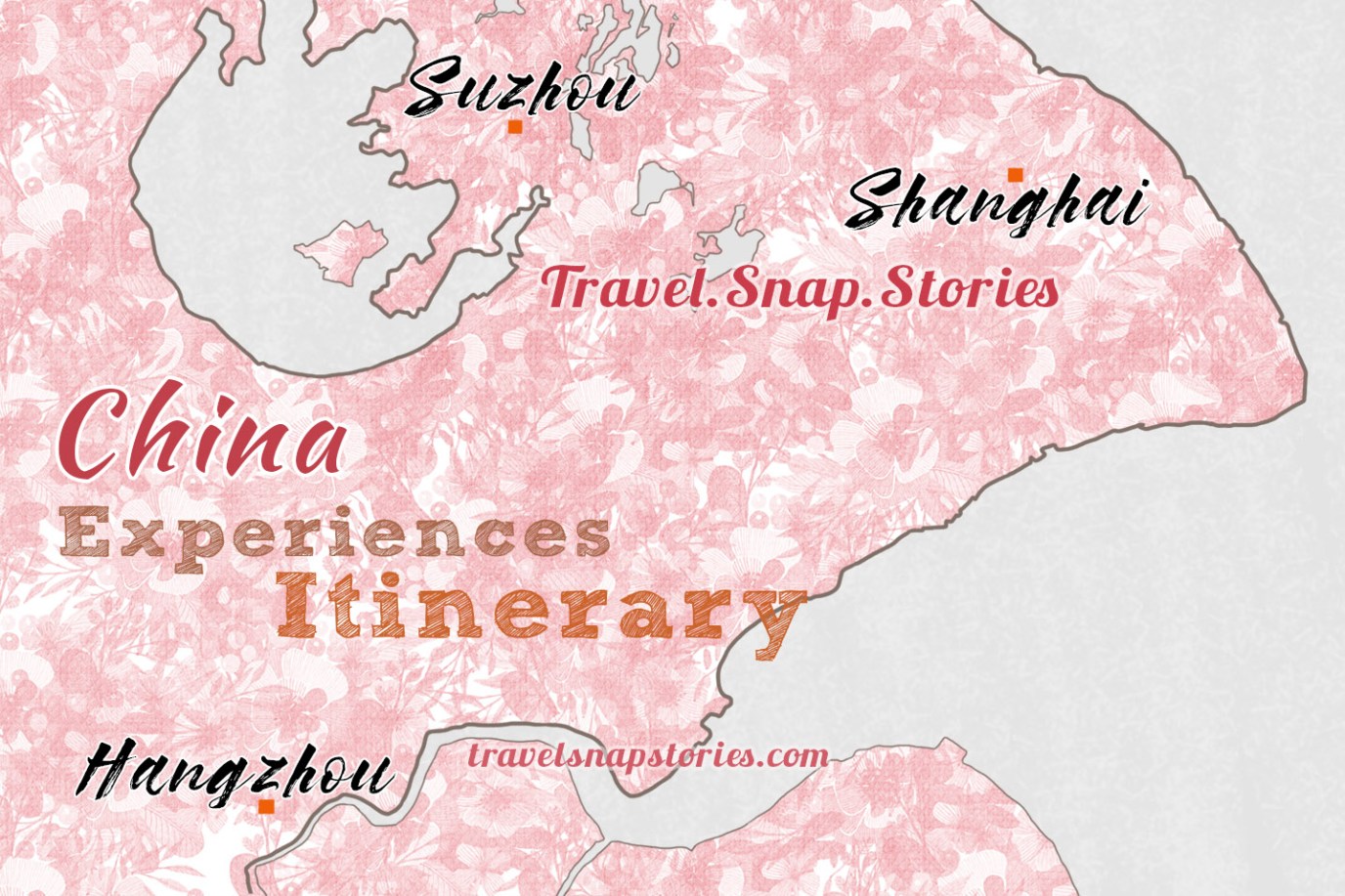


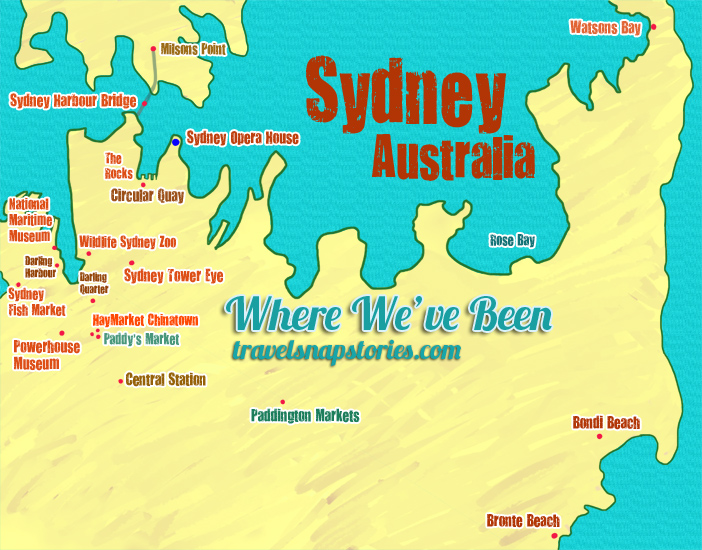

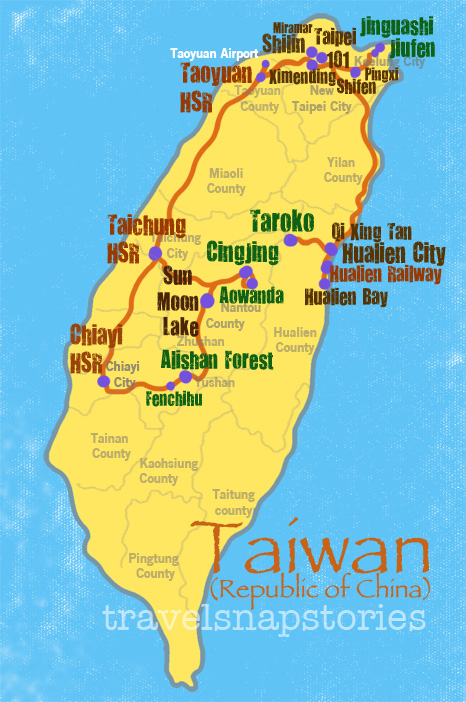
Do you wonder why I was able to write them out so easily after the trip? Did I have a superb mega-memory?
I do have a good memory but I was able to do it with details because we planned the itinerary before the trip with information links and timings in a spreadsheet document. After the trip, I only had to copy and paste some information into this “Itinerary Post” and alter some details if we did not manage to complete the said itinerary.
This careful planning takes place at least one month or more before the trip we are about to take.
Steps We Take in Travel Planning:
1. Plan Our Itinerary in Google Drive Spreadsheet Online
After deciding on a destination, we open a new spreadsheet document in Google Drive, naming it for example as, “Europe 2013” or “Sydney 2014”.
Using the excel format is easier when doing travel planning. We could shift our details up and down, put information into columns easily and even budget the expenses immediately, totalling them up. We had pages of different information in one document so it’s easy to find them when we need it.
Doing it in Google Drive allows us to collaborate on the travel planning together.During the day, Vin could add in details he found while I add in mine. We could even chat via the google doc when something needs to be discussed. The benefit of the document being online also means that we could always refer to it during our travel overseas when we have a Wi-Fi or 3G connection. This was what we did for our Europe Travel because there were so many countries to plan for.
2. Extensive Reading and Checking of Information
Each time before travelling, I would be spending a month reading lots of blog posts, lots of official or information websites, Wikipedia, Trip Advisor and even ask advice from friends who had been to the country.
As we often have limited days to travel, we want to maximise the time spent in the country by not wasting precious time visiting places that would not be interesting. Hence, we use information on these sites to gauge whether it would be interesting and accessible with our child. This way, we would have fewer disappointments and enjoy more.
For our Taiwan Trip, it was the longest time we spent planning and we started 1.5 months before, reading everyday and finalising the details again and again. I read through various travel blogs in English and even Chinese local Taiwanese blogs as information was not complete on most of them. It was not easy to find information on that country then (2012) and most people (Asian bloggers) like to write about the food they eat. We love food too but our travel objectives are of natural places, architecture, history and culture. It was satisfying when we completed all our planned itinerary and the trip went very smoothly. Even the Taxi Drivers were surprised at our planning, commenting that we “did our homework” before visiting their country.
For our Australia Sydney Trip, I was glad to have a friend who had lived there before and she provided me with a lot of help and suggested places for me to go. Another friend came back from it recently and gave me some information. It was also easier to find information via blogs and official website as a lot of people had been to Sydney.
3. Travel Budget Planning
We would write down the amount we need for the attraction and total it up in the Google Spreadsheet. If some are too much or beyond our budget, we discuss whether we should choose a different place. Budgeting is important to us so we do not end up travelling and coming home broke.
We bring CASH so we do not overspend on credit cards. In fact, we seldom use credit unless we really ran out of cash after eating and shopping too much. Enough cash for entrance fees were all prepared before we flew into the country since we had planned it already.
4. Print the Finalised Itinerary and Walkabout with it.
After finalising the timing and details, we would print the itinerary document and while walking around, bring it out to refer. Printing Two Pages on one A4 size page allows the doc to be folded small and easily brought out from a pocket.
Specifically, we have to check the timing we need to spend at each place and the transport we have to take which would be written on the spreadsheet itinerary doc. That’s why we could efficiently move from one place to another and go along as planned.
Examples of how our itinerary looks like:
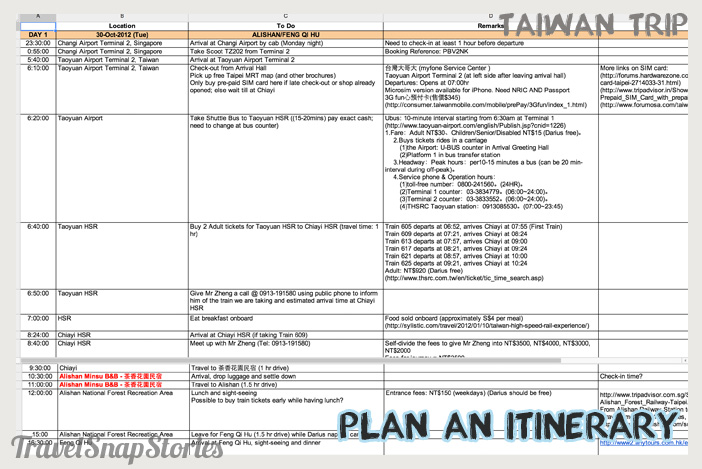

Important Information We Check:
1. Public Holidays in a Country
We dislike crowds and would prefer not to travel with everyone heading to the same place. Also, some shops and museums etc could also be closed.
2. Weather Report
I always read up on the best time to visit a country and based on the days we are able to travel, select the country to visit.
It’s better than going to the country and finding out you need to avoid the sun all the time in the middle of summer or going during the monsoon season when it rains too much. Airfares are cheap during these off-season periods and people would grab these enticing pricing,without realising that the weather could ruin the travel experience greatly. Think about it, cheap fares for a poor experience or more expensive fare for a better experience? The saying goes, you pay for what you get.
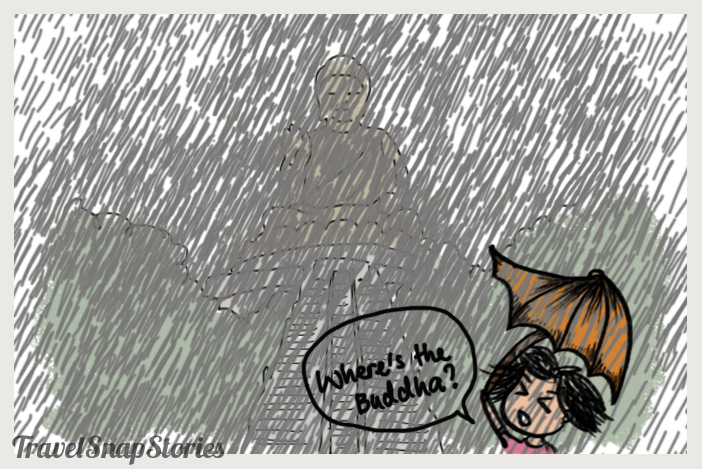
I still remembered how we went to Hong Kong in 2011, our first couple trip out and ended up with heavy rain most of the days so we couldn’t sight-see much.
3. Opening and Closing Times of Attraction
A place might be closed due to holidays or have short opening times. This is important so we don’t miss what we want to look at.
4. Online Incentives for Entrance Tickets
Often, places of attraction are cheaper when you purchase the entrance tickets online beforehand. Some even have combined tickets with transport. This was the case for Australia’s attractions and some attractions in Europe.
Some places might also require online purchase because the entrance tickets might sold out if we buy them at the venue.
5. Online Purchase of Transport Tickets
A discounted rate is often offered if we buy them via the transport companies’ website a certain period before the actual day of travelling. This is risky but if you are very confident you would be taking the transport, there is no harm buying to get the cheaper rate.
For us, we would buy online only if certain transport have limited seats, example, for High-Speed Rail Transport in China and Taiwan. Otherwise, we would still buy at the counter, in case something happens and we were not able to take it.
Planning too much takes the fun out?
Is this statement true? I asked a friend before whether he enjoyed his trip to Japan. He said he did not because there was no proper itinerary planning and the group ended up losing time in travelling from one place to another. Many things were not seen or experienced.
We are not full-time travellers and only had a few days of leave each time in a year. Travel Sight-seeing is different from vacation. We are not there to relax in a resort or hotel. We want to see and experience.
Therefore, all these steps had helped us in many ways since we started doing it for our couple trip to Tokyo in 2007 and later, family trip to Koh Samui 2011 (We didn’t plan much for Langkawi 2009). It was why we could enjoy ourselves during our travels and have less disappointments and regrets when we come back.





 Travel.Snap.Stories
Leave a comment