

When we talked to our friends and family about going for a trip to China, the most common concerns would be safety.
Having taken a free-and-easy 9 days trip through Shanghai, Suzhou and Hangzhou and a 6 Days Trip to Xi’an and side trip to Chengdu without any tour groups and planning our own itinerary, we can quite confidently say that the places we had been to were safe, as long as common sense on security is adhered to.
In this post, we share our tips and experiences for China travel. We would not be separating the sections by each of the province we had visited, as the experiences mostly apply to where we had been but we would have additional notes for various locations when necessary.
Do Note: Our Self-Tour was made possible due to no language barriers. We are bilingual in English and Chinese.
Travel China Tips and Experiences (Updated in October 2025):
Travel China using China Taxis
We were worried that we might get harassed by many illegal drivers offering their services the moment we walked out of the Customs at Pudong International Airport (PVG, 浦东国际机场), so much so that we constantly reminded our son to ignore any stranger who talked to us or offered us anything.
In the end, none of this happened. After stepping out of the Customs gate, we just needed to follow the signboards (in Eng & Chinese) pointing to the taxis (出租车).
“Unlike in Singapore where we call taxis as 德士 (which was probably a direct transaction from its English counterpart), they are called 出租车 in China, which would represent ‘rental cars’ if used in Singapore.”
Signboards Leading to Taxi Stand
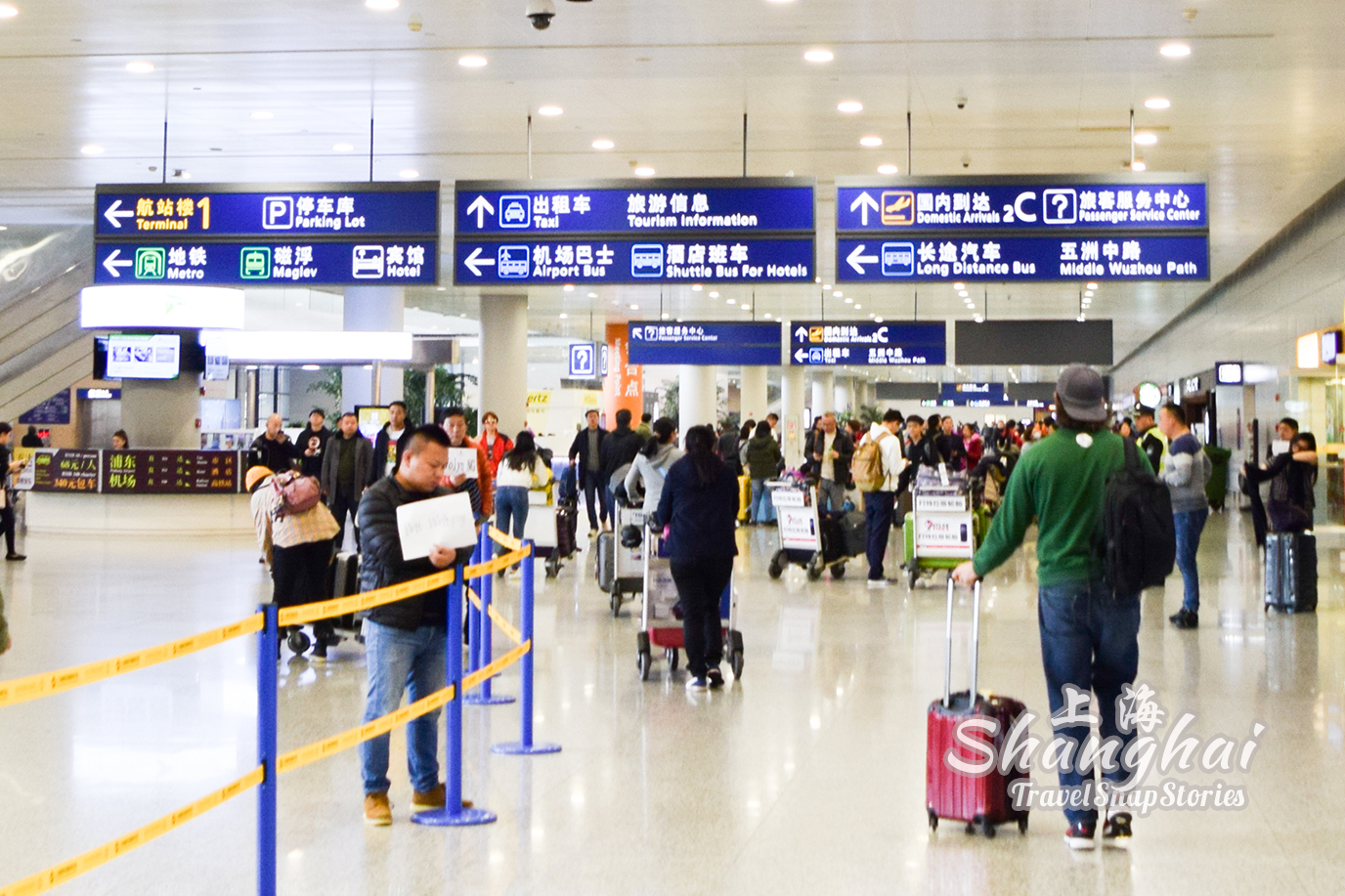
The signboards led us out of the airport building and we arrived at a taxi stand, nicely barricaded for orderly queues to be formed. There was scarcely a queue then, maybe because our trip was during the low tourism season (mid-March). We did not encounter problems loading our 3 large pieces of luggage and a few backpacks. I showed the taxi driver the address and he led us easily to our destination.
Taxi Luggage Space
When we arrived In Suzhou however, the boot of the taxis were smaller as they were taken up by a tank of natural gas. Suddenly, we had no space for our three pieces of luggage (two medium 24″ and one small 20″) ! It could only hold one 24″ luggage so we ended up placing two luggage, one medium size and one small, into one of the back seats. Dar squeezed in the middle, with the two stacked luggage beside him, while Catherine was on the right with Ling on her lap. It was not very safe but we had no choice. Therefore, keep in mind that a luggage larger than 24″ would not fit in.
How Much Taxi Fare ?
The taxi meter started at 15 Yuan (some bigger or newer taxis would start at 16 Yuan or higher)(Note: taxis in Suzhou and Hangzhou start their meters at a lower fare) and would stay there for quite a while, after which, would increment at 1 Yuan at a time. The driver’s license registration number would also be displayed prominently near the front glass panel at the passenger seat.
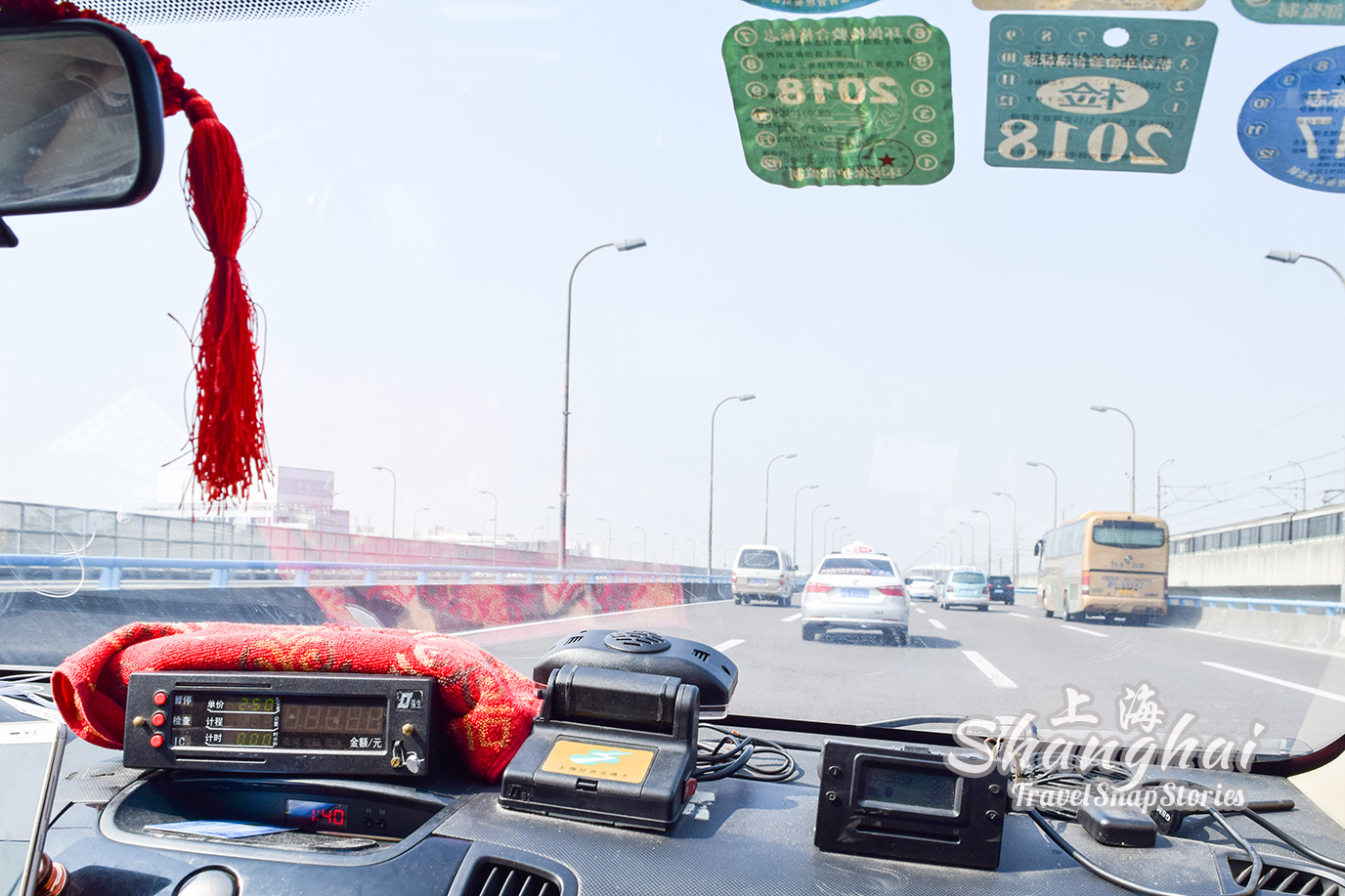
No / Non-Working Seat Belts?!
It was already our habit to belt up, regardless if we were at the front or rear seats. This was even more important when in China, where it’s a norm for cars to zigzag through tight traffic, changing lanes whenever possible, slowing down or speeding up to avoid errand cyclists and pedestrians etc. Somehow the people in China were already accustomed to such chaos but risks of traffic accidents or sudden braking would still be higher than in Singapore. Note that, many times, there were no seat belts for the back passengers or they were spoilt. Cat had Ling on her lap, so we could only pray that nothing will happen.
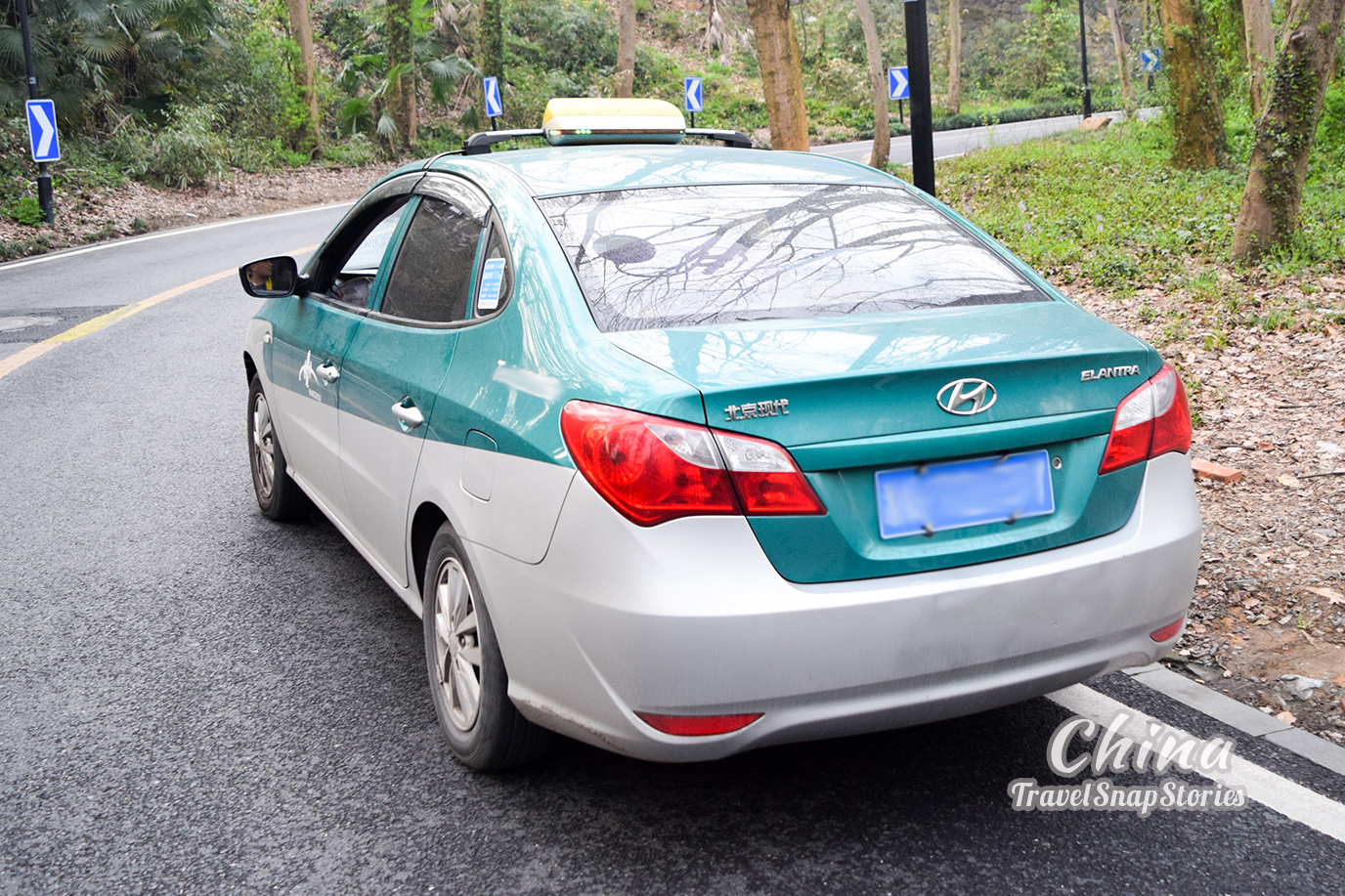
Throughout our 20+ taxi rides, we had not encountered any traffic accidents or near-misses so the rides were still pretty safe since these taxi drivers were already used to driving in such chaotic roads (compared to the private hired drivers, which we intentionally avoided). Some might sound more rude or would express their emotions vocally at other road users, but these were easy to just ignore.
Destination written in Chinese, Unless DiDi
Most taxi drivers did not understand English (or do many of the people around us) so please prepare your destination in Chinese wordings in advance. An exception is when you are boarding a taxi through booking via the DiDi app since the destination was already keyed in before booking.
Remember to get at least a name card of your hotel and have the staff write down the address in Chinese to show the taxi drivers or locals if you get lost. Also, it is recommended to prepare the Chinese Names of the Destinations you plan to visit since many taxi drivers would not understand much English. Note that if you have booked your accommodation through websites like booking.com, they may also have the addresses in the local language available to you via their website/apps.
Useful App for China Taxi Booking – Alipay App
In order to seamlessly travel around many of the cities in China, I would recommend taking rides from private hire companies such as DiDi.
In our previous Shanghai trip, it was not easy to hail a taxi along the street, especially during the night time. We were at a taxi stand in front of a 5-star hotel and almost everybody there had to do taxi bookings as hardly any vacant taxi would arrive there (except the illegal ones, which should be avoided as cautioned by the ushers there). We saw a group of foreigners waiting a long time at the front of the queue before they could finally board a taxi which happened to be dropping a passenger there.
You can download the DiDi app (iOS/Google Store) directly but you may need to make payments in cash upon reaching your destination every time you take a ride. Many drivers felt uncomfortable receiving cash due to possibilities of receiving fake notes and delaying their time to pick up the next passenger. Furthermore, the drivers often dropped us off at locations that were restricted or with high traffic flows, so we were expected to alight from the vehicles as soon as possible.
In our most recent China 2025 trip as foreigners, we were not successful in linking our Alipay or Wechat Pay accounts with the DiDi app for automatic payments. I had to call both companies after reaching China and had only managed to find the following method which worked for us:
First, download the Alipay app (iOS/Google Store) and sign up an account using your credit card details. You do not need to have a China bank account or a China-based credit card to do this. After that, you need to fill in the necessary details and get your account verified by following the instructions in the app.
After that, search for the DiDi mini app within the Alipay app. Open the mini app and you should be able to link it to your Alipay easily so that the fares for your rides will be automatically deducted from your Alipay account.
Fortunately, there was no extra booking fee and you would be paying the same fare as if you have hailed the taxi off the street. It was also easier to trace back which taxi you took with the DiDi app, in case you left some thing behind or wanted to feedback on the driver. All your completed ride would be recorded in your mini app, in case you need to trace back the driver’s details etc.
Our experiences with private-hire car drivers were better than the taxi drivers in our most recent trip, as we felt that they were friendlier and more familiar with the roads. We encountered a few incidents with taxi drivers who were impolite and dropped us at inconvenient locations from our destinations.
How Difficult Is It To Get A Taxi / Private-Hire In China?
At times, we encountered difficulty in getting a taxi (or even a private-hire car) in Shanghai, such as during the morning peak hours and night after 8-9pm. On one instance, we were so frustrated after failing to get a taxi (could not even flag one down on the street), we decided to take a metro back to our hotel instead. Hence, be prepared to switch to metro if you are out after 9pm.
Places Taxis Would Not Stop For You
In Shanghai, if the curbs of a road are coloured in yellow, it means that taxis (should apply to private-hire cars too) are not allowed to stop to drop or pick up passengers. So it is important to make sure your pick-up point is not in such areas or you may end up not getting any successful taxi bookings.
We did not know at first and stood at these lines trying to flag down taxis on the street. Only after booking the taxis several times and asking the drivers, did we know that they actually could not stop at certain places for us. They ended up stopping in the middle of the road, instead of the roadside. We need to quickly get on or they might be caught on camera. (Cat says: It was always a mad rush to get on the taxis, especially I had to carry a toddler and run across the road!)
Traffic law enforcement is highly regulated in the places we had been in China, with numerous CCTVs and law enforcement officers everywhere. Looks like China is very determined to improve their traffic conditions. There are some parts which we do not understand though, such as in Hangzhou, pedestrians will not be penalized even if they are jaywalking; only the drivers will be penalized. At the end of our trip, we were still not certain which were the legal areas we could wait at, to flag a taxi.
Travel China – Booking HSR (High Speed Rail)
We had originally wanted to book the HSR using the official 12306 website/app but the user experience was so bad that we gave up after a week or so. Or both the website and the app, we kept encountering connection time-outs and long response time. We had to keep retrying at different times but we the poor connectivity persisted.
The biggest pain point was during the identify verification phase, where we had to upload photos of Vincent’s passport and him holding the passport. We had to keep trying because the system kept showing connection errors every time we tried to upload the photos.
Finally, after numerous tries over many days, the photos were finally uploaded. We then had to wait for the administrators to review and approve the identity, before we could start buying the HSR tickets. Despite sending several emails to them (did not find any other way to contact them), the review and confirmation of our identity were never processed.
Therefore, we switched to trip.com to purchase our HSR tickets instead. Similar to the official website, tickets can only be purchased 15 days before the boarding date/time. If you want to make sure you are able to successfully purchase the tickets you need, please remember to buy them as soon as they are available. Here is a guide from trip.com.
We had a hiccup with our HSR booking for our rides between Xi’an and Chengdu. Vincent’s passport number was incorrectly entered (it was using the default number like ‘12345678’) and he was unable to enter the train station. In the end, he had to explain the train station staff and go to the ticket counter to buy a new set of tickets using the correct Passport Number. No amendments were allowed on the existing tickets and the original tickets had to be cancelled manually. Do take note that the details of all passengers are entered correctly before purchasing the tickets online.
Travel China – Currency Exchange
We did our currency exchange back in Singapore prior to our trip, estimating the amount of cash we would need. We had projected this amount based on the assumption that we would be able to use our international credit cards for things like Didi’s taxi rides, food and souvenirs. It turned out that many places in China do not accept payment via international credit cards (外卡). (This was back in 2018)
NOTE: (In 2025) Alipay and WeChat accepts linkage to International Credit Cards now so it is more convenient to travel and make payment there. However, for transactions that are more than RMB$200, a 3% extra charge is added to the total bill.
As a result, we did not have sufficient cash for our 9-day trip and ended up withdrawing from the local ATMs twice. Some banks’ ATMs required additional fees for foreign account transaction and we have noticed that XXXX Bank also charged a nominal fee of S$5.00 per transaction, with the maximumum withdrawal amount of 1,000 Yuan per transaction. Besides the airport, we only come across a currency exchange store throughout our trip, so they are quite rare in China.
Both Alipay and WeChat Pay are very common now in China (especially in Hangzhou) and is the preferred payment method by many merchants. Requesting to pay using international credit cards directly often resulted in a blank or surprised look from the staff, and would end up getting a reply that they do not accept such a payment method.
Travel China – Cross the Chaotic Roads
Roads in China are infamously chaotic, though we noticed that efforts have been put in by the authorities to improve on the drivers’ driving habits. CCTVs and Law Enforcement Officers are plentiful throughout many locations we have been. Even drivers who unnecessarily sound their horns are penalized and publicly shamed with their license plates displayed in digital boards on the roads.
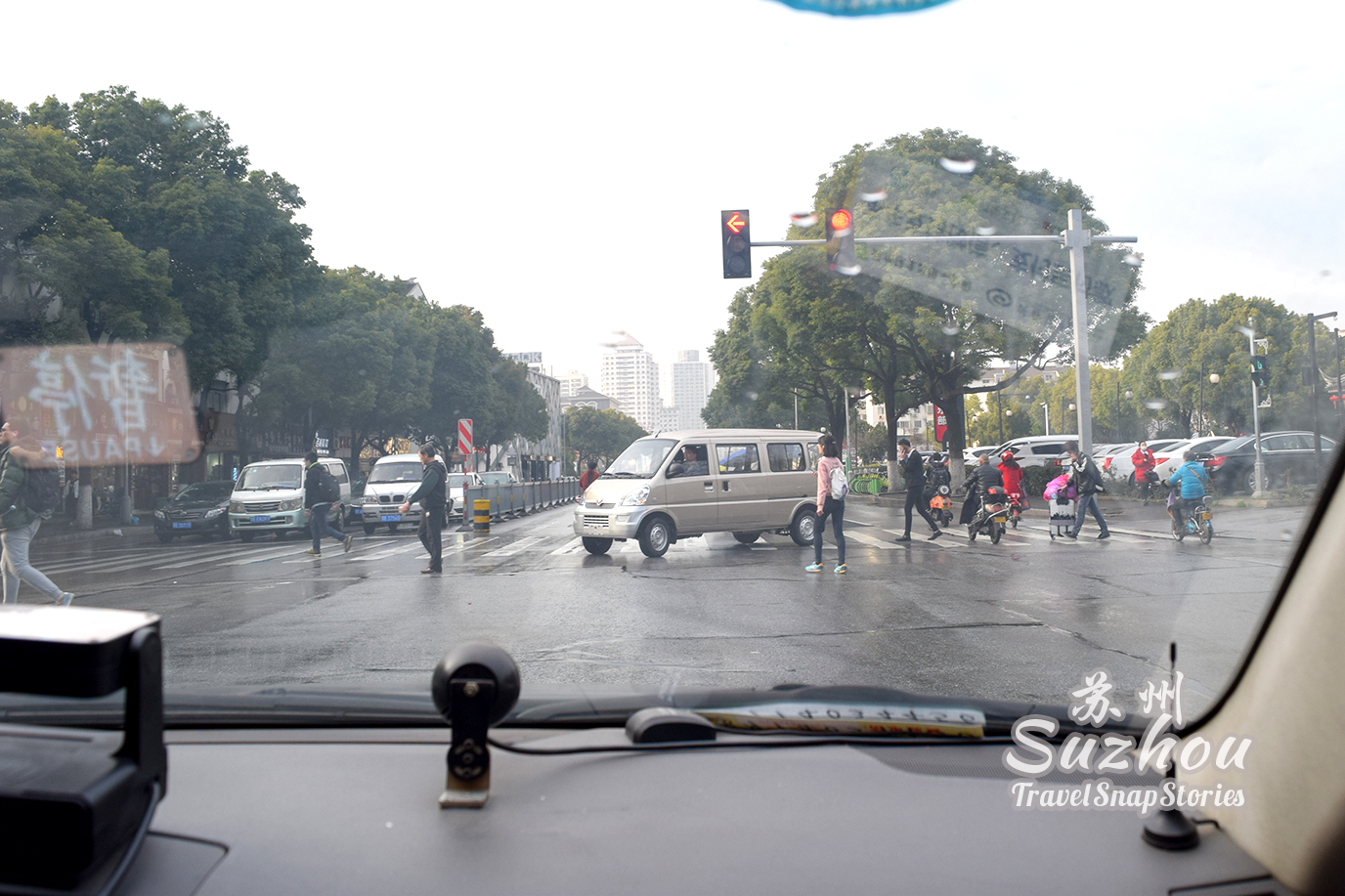
Still, it is important to practise the following as a pedestrian there (it’s highly inadvisable to drive in China as a foreigner):
– Even if the traffic lights are in your favour, check careful for incoming traffic before crossing the road. One advice would be to follow locals when crossing the roads.
– In many areas, there are dedicated lanes for public transport like buses, and separate lanes for motorcyclists and cyclists. The latter are prone to ignore traffic laws so be extra careful when crossing those lanes.
– Drivers are allowed to perform right turns even if the traffic light is red, so be aware of vehicles turning in from the left when you are crossing the roads, even if the light is in your favour.
– Some areas have been declared as vehicle-free, such as the walking streets. However, we still encountered several motorcyclists driving along these roads so always be alert, especially when you have children with you.
Travel China – Walking Around
Safety on The Streets
We did not feel unsafe when we were out walking on the streets at night (latest was 9pm+) but of course we try to avoid dark, quiet alleys.
Once, we had a taxi driver who refused to drive us to our hotel’s door in Hangzhou (his reason was the roads may be closed due to a night market) and we had to walk quite a distance at night before we reached our hotel. We did worry a little at first but majority of the shops were still opened and the roads lit. In fact, some shops closed during the daytime and opened in late afternoon until late at night. Hangzhou has a more active nightlife.
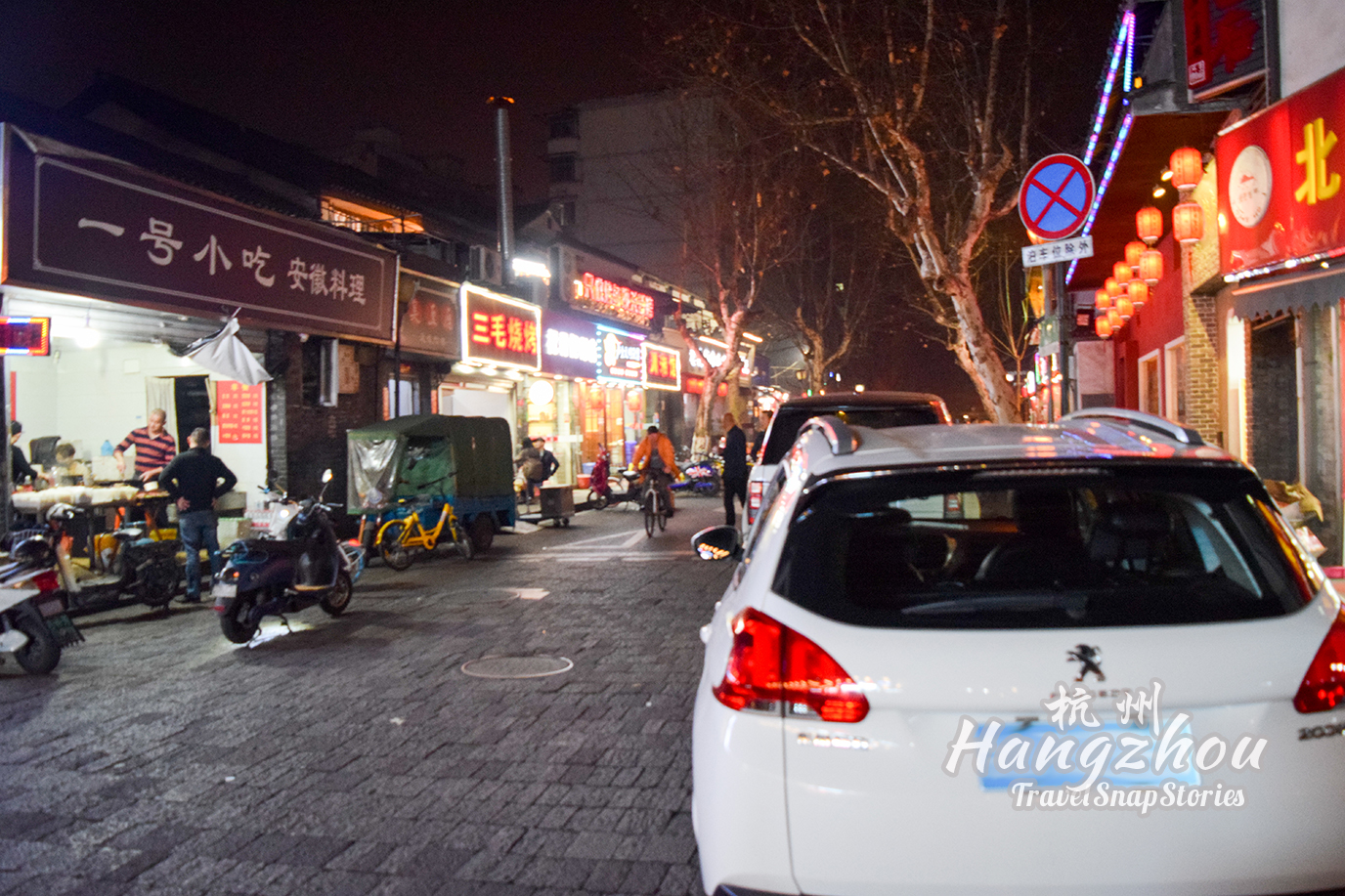
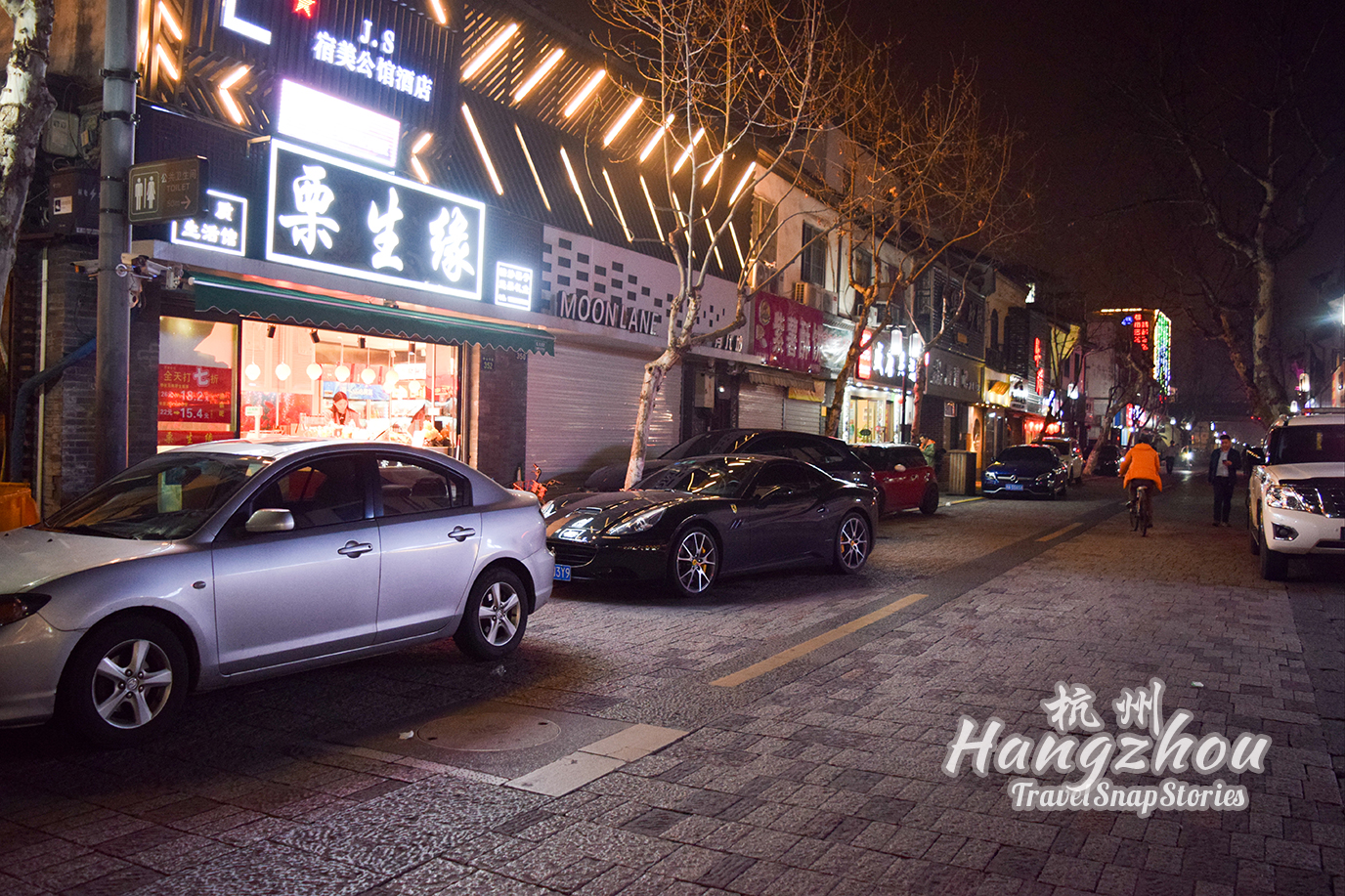
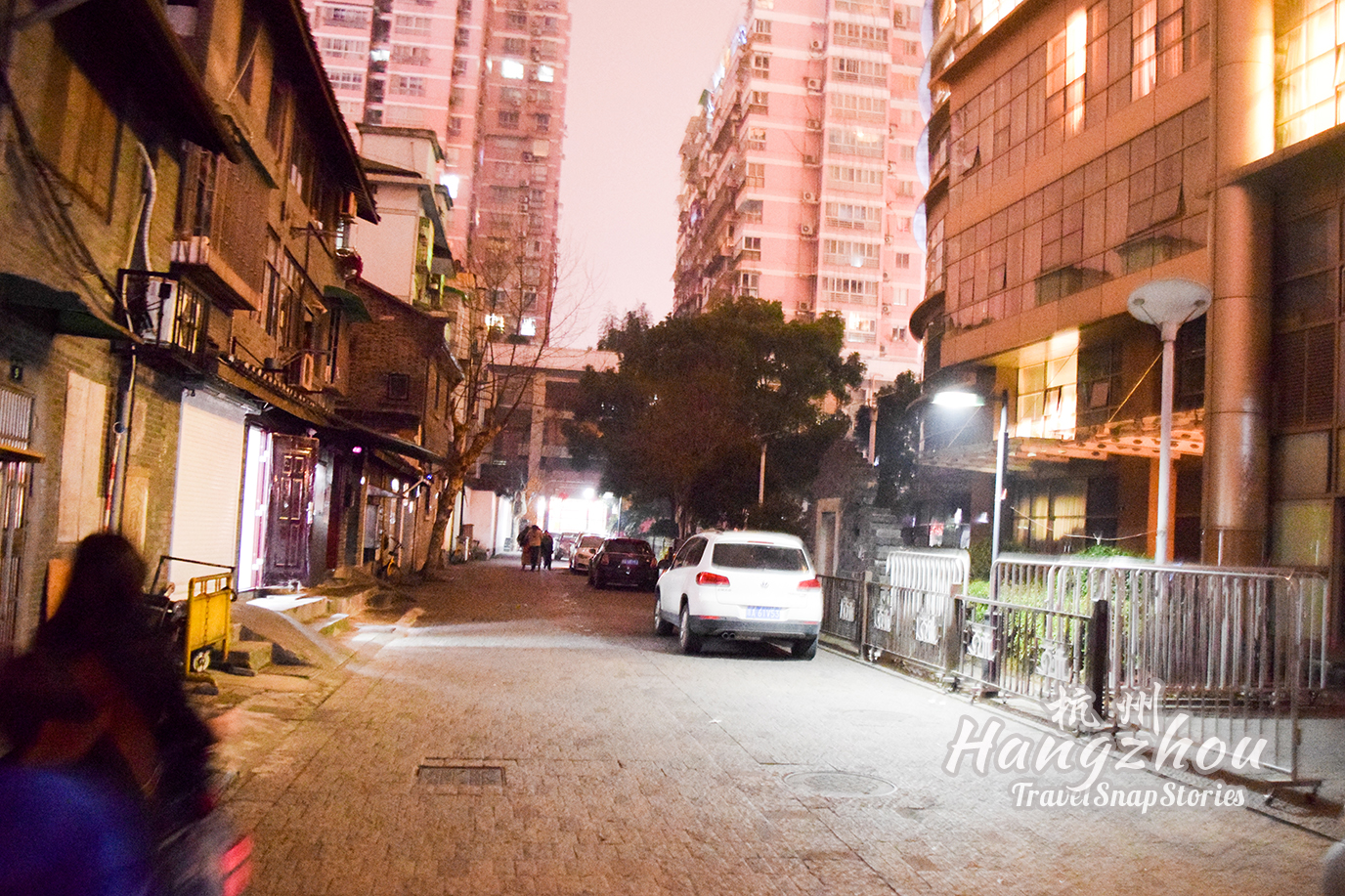
Generally, the streets are clean and most people we met were polite and civilized. Our perception of China changed over this trip.
Common Travel Sense (just like anywhere else in the world):
- Keep your children close to you and within sight at all times. When we go to the restrooms etc, we make sure we do not leave any child unaccompanied outside.
- Be wary when strangers (especially pretty ladies) approach you and offer to bring you somewhere or give you some good deals (e.g. tour package). We do not believe in free lunches or cheap deals and always ignore them. In fact, Cat was suddenly approached by one pretty lady who heaped compliments on our two kids and how she looked, then wanted Cat to visit her beauty saloon. However, we did have exceptions where we were helped by kind-hearted strangers, such as a lady who helped to carry Dar’s luggage, when we were going down the long flight of stairs to our train’s platform. In general, we can be less wary of strangers that are going the same way as us.
- In Xi’an , someone approached us to interest us in hiring a small Tuk-tuk kind of ride that will “bring us to places in the “Giant Wild Goose Pagoda Scenic Area”, saying we can stop at “each stop”. This was a scam as no vehicles are allowed inside the walking area.
- Do not board any vehicle on the street that is not a taxi. We had several occasions when a car would stop by us and asked us to board his car. When we ignored them, they even followed us for a while, calling out to us. Boarding such ‘illegal taxis’ (黑车) is a big NO NO and be prepared for the worst if you succumb to such deals, regardless of how urgent you need to get to your destination.
- Do not always trust the words of taxi drivers, like when they are proposing alternate destinations, claiming that those are the must-visit places etc. There is always this possibility that he is just trying to convince you to hire him as your private driver and may not be giving his truest advice. Do enough research of the places you are going and be firm on your planned itinerary.
Travel China – Prepaid SIM cards
To avoid the inconvenience of switching in and out of our SIM cards, we did not opt for buying to local China SIM card for our trip. If we could choose again, at least one of us would get the local SIM card for the following reasons:
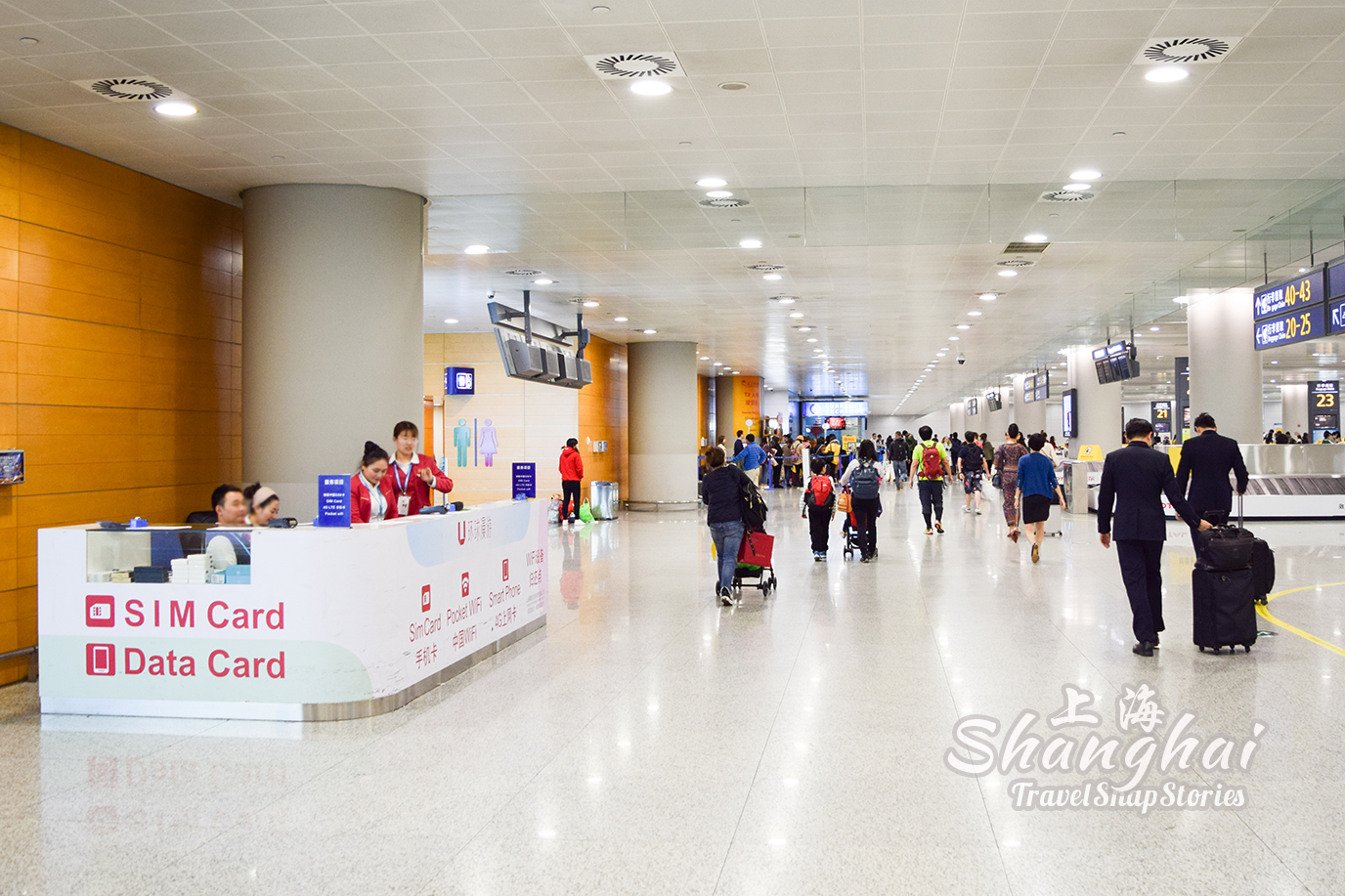
1. Upon clearing the customs at the Pudong International Airport and entering the baggage claim area, there was a counter for the purchase and activation of the China SIM cards. There was hardly any queue (our trip was during the off-peak season) and the process appeared to be smooth.
2. The 1 GB data provided by Singtel for our Data Roaming plan was not sufficient for our 9-day trip as one of us had exceeded the data limit, with additional charges for more data (T^T didn’t know Wi-Fi in hotel + VPN did not work at times, and uploaded to social media).
3. There were many occasions when the taxi drivers would try to call us after they picked up our booking via the Didi app. It seems like a common practice for them to confirm the pick-up point after getting the booking. Most of the time, they would not be able to call through my Singapore number which led to some minor miscommunication at times. Once, a driver managed to call through (he probably had some IDD configured for his mobile plan) but when I checked my phone bill later, I was actually charged IDD fees, even though it was an incoming call! T^T
Travel China – Attractions Close Early
Places of Attractions may close 30-45mins earlier than the stated closing time, especially if there are not much visitors. For example, the Suzhou Silk Museum was stated to be closed by 5pm, but they started chasing us out at 4.30pm (we were there slightly before 4pm), so we didn’t get to visit some parts of the exhibitions. They also did not allow any more new entry after 4pm – 1 hr before “official closing time”. This is also true for several Suzhou Classical Gardens. Therefore, do plan your timing for these gardens properly.
Buying Attraction Tickets
We had to get most of our attraction tickets/services from the attractions themselves because they didn’t sell children’s tickets online.
Travel China – Food and Drink
Street Food May NOT be safe
We tried only restaurant foods in China as we were concerned about the cleanliness of street foods for our children. The only street foods we bought were ice-cream, candy and fresh squeezed juices.
In fact, we were warned by a taxi driver on our way to a famous street in Hangzhou called, “He Fang Street”. We had wanted to eat our dinner there when he said, ” You have children with you, I think it’s best not to eat those foods in He Fang Jie, the “gutter oil” incidents came from there….” (google that if you never heard of it). When I heard that, we quickly changed our mind and heeded his advice to visit a restaurant popular with the locals. We had a nice dinner there and did not try any street food after that.
Convenience Stores – Cooked Food
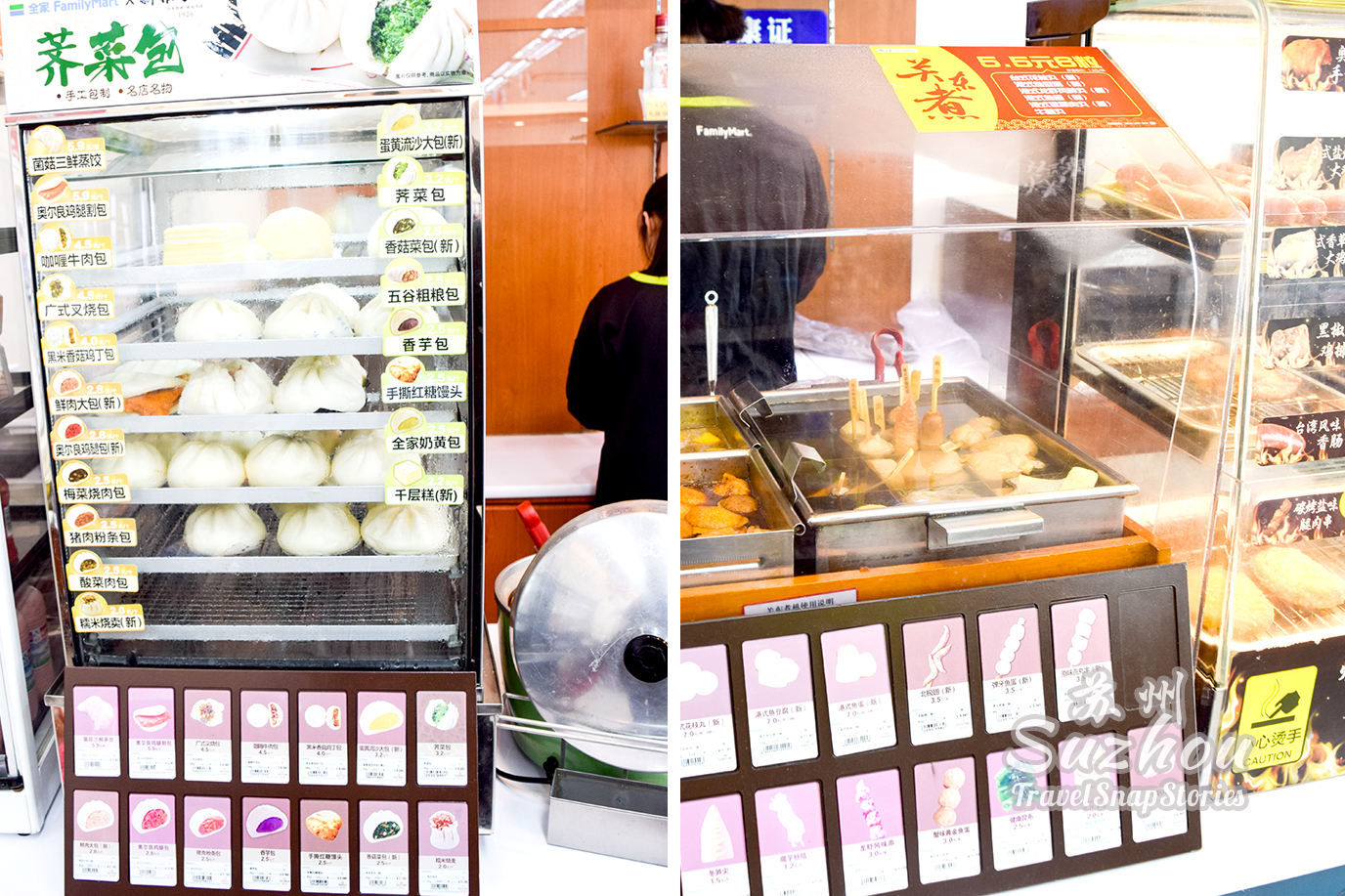
We could buy simple Breakfast/Lunch/Snacks, such as “Bao 包“ or steamed buns from 24-hrs Family Marts. They also sell cooked food such as porridge or bentos sealed in plastic containers, which you could then ask the staff to heat up for you in their microwave. “关东煮” or “Oden”, a Japanese one-pot dish, is also available but we didn’t try.
There was one such Family Mart underneath our hotel (Pace Hotel), so we saved some time for attractions in Suzhou, buying these convenient food stuffs instead of eating in restaurants.
Beware of Imitation Tea
- We saw several stores selling cheap “Long Jing Tea” in Hangzhou. Earlier, a taxi driver told us it was not possible to have the branded tea selling at a cheap price (CNY$15-24). He claimed that those were just normal “Green Tea” sold to unsuspecting travellers who could not differentiate. If he did not tell us, we would not have known how the real Long Jing Tea taste like too and might have bought those.
- The branded “Long Jing Tea” should have a nutty fragrance (栗香) and be quite expensive. (Good grades with price around CNY$400 to $8000 / 500g).
Water
- Tap Water is not safe for consumption. Purchased bottled water or boil water in your hotel kettle and bring them along in water bottles. The temperature was around 8 – 13 degrees Celsius when we were there, so we used thermal vacuumed flasks. To prevent further heat loss, we kept them in a zipped thermal bag.
- Various places of attractions, railways and airports actually provided hot water dispensers so we could safely drink boiled water.
- Restaurants provided boiled warm water or sometimes tea for free.
Travel China – Travel Clothing for Travel in March and June
Dress in layers as the weather was quite bizarre during March in the three cities we visited. It was very hot on one day and around 27 degrees Celsius in the afternoon with sunny weather. The next day it had changed to 9 degrees Celsius and rained. Some days, it could be raining the whole day and freezing with cold winds.
In June in Xi’an, the weather was extremely hot where the sun seemed to burn into your skin right from 9am. We wore UV protection hand sleeves, UV hats and dri-fit /cotton t-shirts. I had to keep tying my hair as it was just too hot. Light weight long pants are still necessary to prevent insect bites and gave sun protection. Jackets are not needed but one could wear UV protection jacket. It could also be
Travel China – Public Toilets / Prepare Toilet Rolls
Public Toilets are surprisingly clean and modern in Shanghai with toilet papers and hand soaps provided.
Some more rural attractions for example in Suzhou, Hangzhou and Xi’an do not have soap provided. Thus, we use this item called “Paper Soap” where it turns into soap the moment it touches water. However, it formed too much soap that it needed more water and time to wash it off. When we are in a hurry, we just use wet wipes.
There were sitting toilets but the majority were still squatting ones. I found most of the sitting toilets in handicapped toilets, so I used those with my toddler. For Xi’an, we were mostly in major shopping malls, so we used the toilets in it and there was soap provided.
Before going to China, I had read up on some tips and prepared rolls of toilet papers in advance. What I did: After a toilet paper roll had been used until there was only half a roll, press it down flat and put it into a zip-lock bag. You could place 2-3 rolls in a bag this way. Prepare 2-3 bags this way and use one bag when out and about in China. Leave the rest in the luggage. Top up the rolls when necessary.
This Travel in China Guide with Tips and Experiences was co-written by Vin & Cat.
MORE READS ON OUR CHINA TRIPS:
Read A Summary Itinerary of Our China 2018 Trip: 9-Day Family Travel Itinerary in China Shanghai, Suzhou & Hangzhou
Read A Summary Itinerary of Our China Xi’an 2025 Trip: 6-Day China Itinerary: Xi’an | Chengdu




 Travel.Snap.Stories
Leave a comment